Lizzie Deignan was not supposed to win the first Paris-Roubaix Femmes.
She wasn’t the favorite. She wasn’t the second favorite. On her own team, she wasn’t even the plan.
“I was there to help Ellen Van Dijk and Elisa Longo Borghini,” Lizzie said. “That was my job.”
The race itself had been given the same narrow margin of belief. For more than a century, men have carved their legends into the mud and cobbles of the Hell of the North. The women had been told it was too much for them — too brutal, too dangerous, too far. They were told no one would watch. Decorated riders like Lizzie had been fighting for decades to see women’s cycling in the spotlight. No one knew how the race would go, or how it would be received by the world.
The women lined up anyway.
On that gray October morning, Northern France was nearly silent. COVID restrictions had emptied the roadside cafés, the fields, even the famous Roubaix Velodrome. There were no crowds, no chaos — just the hollow hiss of tires on wet stone.
It felt almost like the world had stopped. And maybe that was fitting. Because what was about to happen was 125 years too late.
Ask any rider to describe Paris-Roubaix and they’ll tell you it’s more fight than race. A 116-kilometer gauntlet of rough farmland roads, jagged cobblestones, and unrelenting noise. Slow down for even a moment on the cobbles and watch the competition sail away as you mash the pedals to get back up to speed. Crash, and you or someone caught in your wake will likely be heading home in a cast.
“In training it just felt horrible,” Lizzie said. “If you lost any momentum, it was like hitting a brick wall.”
This time, the wall was wet. Rain turned the pavé into a slipway of mud and oil, and the peloton braced for chaos. Yet beneath the fear, something else buzzed.
“There was this feeling of camaraderie,” Lizzie said. “It felt like the opportunity to be there, to race together, was bigger than whoever was going to win."
“If you’re going to be chased by someone,” Lizzie said, “It’s not Marianne Vos you want.”
But Lizzie held her ground. Each cobbled sector a test, each corner a calculation between speed and survival.
“The last thing you want to do when your legs are that tired is turn left onto another set of cobbles,” she said. “But I kept thinking, just one more.”
As she neared the final sector, Lizzie’s lead hung at a little over a minute. “I knew if I could keep the gap from going below that, I could do it.”
Finally, the stones gave way to smooth concrete. Lizzie entered the Roubaix Velodrome alone, mud-streaked and wide-eyed. There was no roar — just a thin scattering of voices from teammates, press, and staff, bouncing off the concrete bowl. A strangely small sound for such a massive moment.
“It felt sort of eerie in a way,” Lizzie said. “But crossing the line was just pure joy. I really tried to feel it, to soak it all up. It was the first win that felt bigger than me.”
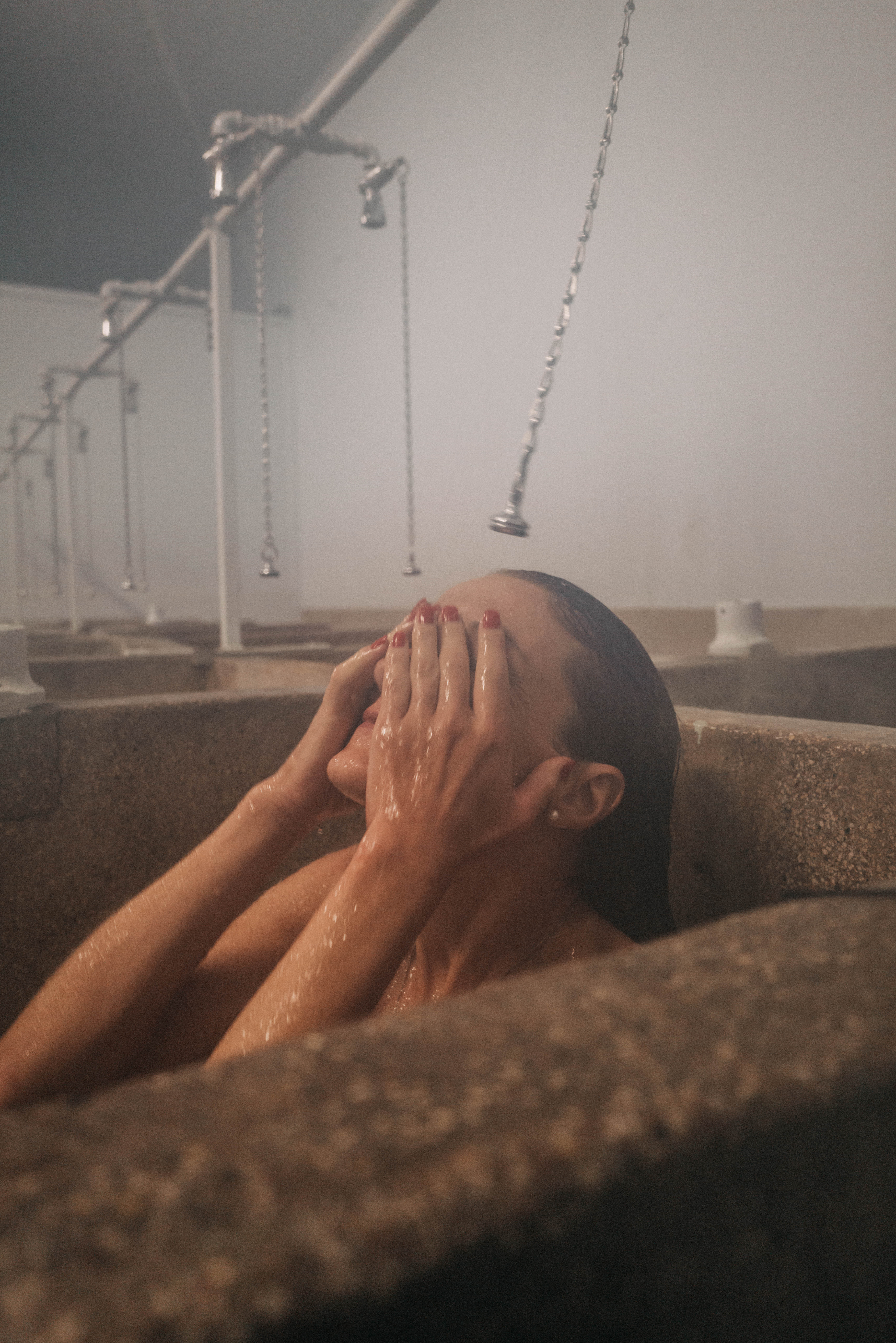
Minutes after the podium, Lizzie stepped into the concrete showers of Roubaix, the most famous locker room in cycling. For generations, only men had been inside. Each stall was marked with a brass plaque engraved with a name: Merckx. Hinault. Cancellara. Soon, there’d be a new one.
“I’d seen those pictures forever,” Lizzie said. “I never imagined I’d be the first woman getting a plaque in those showers. It was surreal, but it also felt symbolic — like washing away years of underestimation and misogyny and just being let down by the sport for many years.”
That night, the team packed up quickly. They had a race in England the next day. As the car pulled away, Lizzie’s phone picked up signal in the remote French countryside.
“It just blew up,” she said, laughing. “People were actually watching this one. All my other wins were highlights on YouTube, but this one — people saw it live. It made a difference.”
When the world finally looked up from the quiet gray of that French morning, it saw something new — not a women’s version of a men’s race, but Paris-Roubaix itself, reborn.
“We showcased what we could do, and we blew it out of the park,” Lizzie said. “On the toughest course, in the toughest conditions. We put on a great show.”