Written by:
Kyle Russ, Lead Biomechanical Engineer
Wendy Ochs, Senior Biomechanical Engineer
Paul Harder, Principal R&D Engineer
Domane carbon evolution: From IsoSpeed to Gen 5
The iconic Trek Domane platform has evolved with each generation, but the through line is unwavering: Domane is a comfortable, confidence-inspiring, and efficient endurance road bike built for long, fast, fun miles in the saddle.
The first-generation Domane was built around 700x25c tires and rim brakes that squeezed narrow rim profiles. Brake power aside, those skinny tires required demonstrably high pressures, so Trek’s engineers and designers at the time designed a revolutionary compliance technology to help smooth the ride. They dubbed it the IsoSpeed Decoupler, or simply IsoSpeed. IsoSpeed provided a non-rigid junction between the seat tube and top tube that allowed the seat tube to flex far more than a traditional frame at the time, thus making the ride smoother and more comfortable.
The tech worked so effectively that Domane helped riders like Fabian Cancellara, Lizzie Deignan, and Elisa Longo Borghini climb to the top step of the podium at the legendary rough road proving grounds of Paris-Roubaix.
Collecting race results over the years is an honor for Trek, but much has changed in bike tech since 2012. Hydraulic disc brakes have replaced rim brakes, freeing up real estate for larger tires. Tire volume has therefore incrementally increased as riders have sought smoother, more capable road rides. This tire revolution has opened the door to create a much lighter bike with less complexity, similar compliance, and improved pedaling stiffness. Enter Gen 5 Domane.
Figure 1: Kyle Russ and Paul Harder transferring instrumentation between test bikes in the Trek Performance Research Lab.
Gen 5 Domane, down to the details
The design team for Gen 5 Domane set out with three goals in mind: limit the vibrational power1 transferred to the rider, improve pedaling stiffness, and reduce bike weight. Vibrational power is a metric used by the Trek Performance Research team to measure energy transmitted to the rider while riding over rough terrain. So how does a bike that notably omits IsoSpeed still provide a comfortable ride while also offering increased pedaling stiffness? The answer comes down to three components: seat post, frame, and tire.
The seat post geometry and carbon fiber layup were optimized for vertical compliance and lateral stiffness. The post has an ovalized internal cross-section that allows the post to flex under harsh impacts while retaining lateral stiffness when the saddle is loaded while handling the bike.
Figure 2: Gen 5 Domane seat post providing a smooth ride during vertical compliance testing on our in-house treadmill.
On the frame side, the layup has been optimized for both vertical compliance and pedaling stiffness. The new bike has a 6% increase in the Tour Magazine Pedaling Stiffness test², which places Gen 5 Domane in the “sweet spot” directly between the Gen 4 Domane and the Gen 8 Madone — not quite as stiff at the bottom bracket as the ultimate race bike, but notably improved power transfer to the pedals versus the outgoing Domane platform.
Figure 3: Putting power down on Gen 5 Domane.
Why vertical compliance testing is only part of the story
Historically, frames have been placed in test lab fixtures with weights hung from the saddle to measure the overall deflection from the frame and seat post. This is standard practice, but it falls short of including the wheel and tire in the system. The test also uses static loading as opposed to realistic dynamic loading. Measuring full system compliance is therefore challenging, especially when incorporating the dynamics of pedaling over rough terrain, but that’s where the Trek Performance Research Lab comes in. The Trek Performance Research Lab was built to study the rider-and-bike interaction in a dynamic pedaling environment.
The lab is built around a custom, slat-based Woodway treadmill that allows Trek engineers to bolt on any riding surface. This capability allows Trek to dig into the details of bike dynamics, and for that, we pair the treadmill with a wide range of data-capture tools. From 3D motion capture to strain gauges and accelerometers mounted to the bike, we like to say that we “measure everything from bump to body” in the lab. Using these capabilities, the Domane design team was able to ensure the next-generation Domane hit its performance targets.
Measuring vibrational power
The Trek Performance Research team works internally with each product development team to help answer research questions around comfort, efficiency, and control. Because comfort is a subjective impression or feeling, we strive to put data behind what makes a bike comfortable so that we can compare prototypes to existing Trek bikes as well as competitor bikes.
From a data-collection standpoint, our definition of comfort is simple in principle: reduce the amount of vibrational power that gets transmitted to the rider for a given speed, terrain, and bike3. While simple in principle, the methods for capturing vibrational power are rather sophisticated.
Figure 4: Paul Harder and Wendy Ochs getting bike and rider ready for another test run.
Gen 4 and Gen 5 Domane were instrumented with a force-sensing saddle and handlebar. By measuring the force at the touchpoints and integrating velocity from accelerometers at those same locations, we can calculate the power transferred through each touchpoint to the rider. Using this method, we put Gen 4 and Gen 5 bikes head-to-head on a continuously rough surface, sweeping speeds from 7-20mph and sweeping tire pressures.
The recommended tire pressures for the 32mm and 35mm tires were set using the Wolf Tooth pressure calculator, which accounts for surface conditions, bike and rider weight, tire size, and tire construction. The pressure sweep was set by running the recommended pressure +/-20%. For the comparison to the 700x25c tire, we used a tube-type pressure recommendation based on historical data.
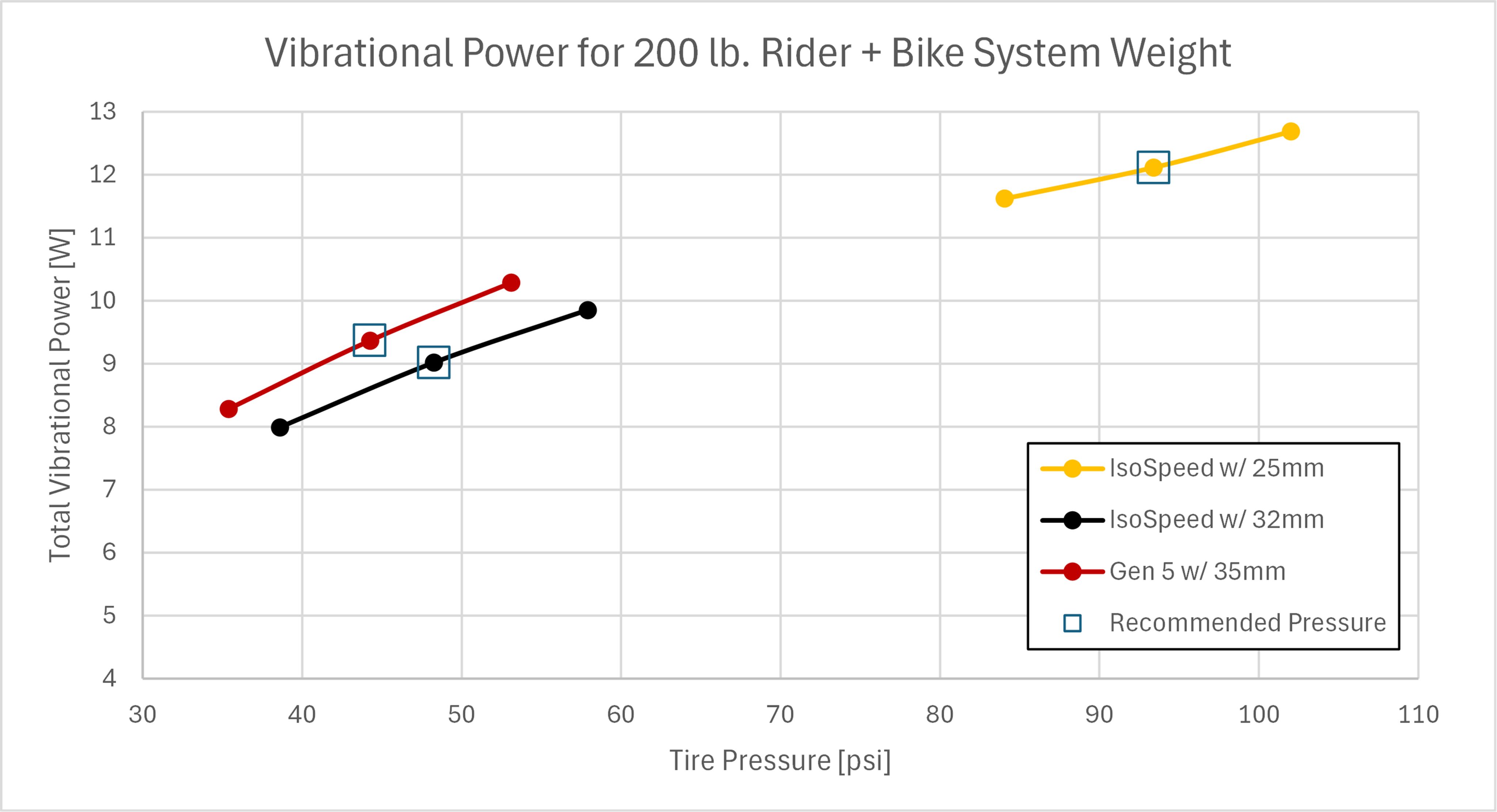
Figure 5: Vibrational power for 200 lb. rider-and-bike system weight on a rough surface on the treadmill.
The plot above shows that IsoSpeed was doing some heavy lifting in the era of high-pressure, 25mm tube-type tires. Even with IsoSpeed, the vibrational power transfer with 25mm tires is 19% higher versus Gen 5 without IsoSpeed. Going from the 32mm tire to the 35mm tire increases the internal surface area of the tire by roughly 10%. If pressure is kept the same, the total outward force acting on the tire casing therefore increases by 10%. With that in mind, to keep the outward force on the tire casing constant between the 32mm and 35mm tires, we need to decrease the pressure by 10%.
Doing so puts Gen 5 Domane within 5% of the vibrational power of the Gen 4 bike with IsoSpeed. Not bad for a bike that weighs 292g lighter without the maintenance of IsoSpeed. Of course, Domane was not only tested in the lab. At the time of writing, pre-production Gen 5 bikes had accumulated more than 400 hours and 6,000 miles of ride testing among our ride testers.
Measuring rider and bike motion
To investigate how a bike responds to rough terrain that yields high or low force, acceleration, and therefore vibrational power, we use three-dimensional motion capture, or “mocap.” We captured the movement of the rider and bike using 12 OptiTrack PrimeX 22 three-dimensional infrared cameras to see how Gen 4 and Gen 5 Domane responded on the treadmill.
Figure 6: Wendy Ochs capturing three-dimensional motion.
The bikes were instrumented with reflective markers on every segment, which allows us to see how the different areas of the bike respond to inputs from the terrain in three-dimensional space. From a chassis smoothness standpoint (i.e. how much does the bike smooth the ride), we look at the markers around the bottom bracket. To understand what the rider experiences at the saddle, we consider pelvis and saddle movement. In simplest terms, the smoother the ride, the more “coupled” the pelvis and saddle are. Said differently, when riding on rough terrain, the saddle can bounce the rider, causing a decoupling between the pelvis and saddle. Alternatively, the rider can hover off the saddle to smooth the ride, which is extremely taxing metabolically.
The plot below shows the lap ensemble-mean (i.e. average displacement per lap of treadmill) at 20mph for Gen 4 Domane with 32mm tires and Gen 5 Domane with 35mm tires. The lap-to-lap standard deviations are shown by the lightly shaded areas around the curve. The shaded areas under the curve are filled in with transparent blue and yellow color, so the green shows areas of overlap. The trends shown held true across all speeds, but we’ll focus on 20mph here because it shows the most vertical displacement of the bike over the terrain. As we can see, the difference in “chassis smoothness,” or vertical bottom bracket displacement, is 0.08mm, while the saddle-to-sacrum displacement, or “coupling,” only varies by 0.11mm. In other words, the difference between the response of the Gen 5 bike and the Gen 4 bike is indistinguishable.
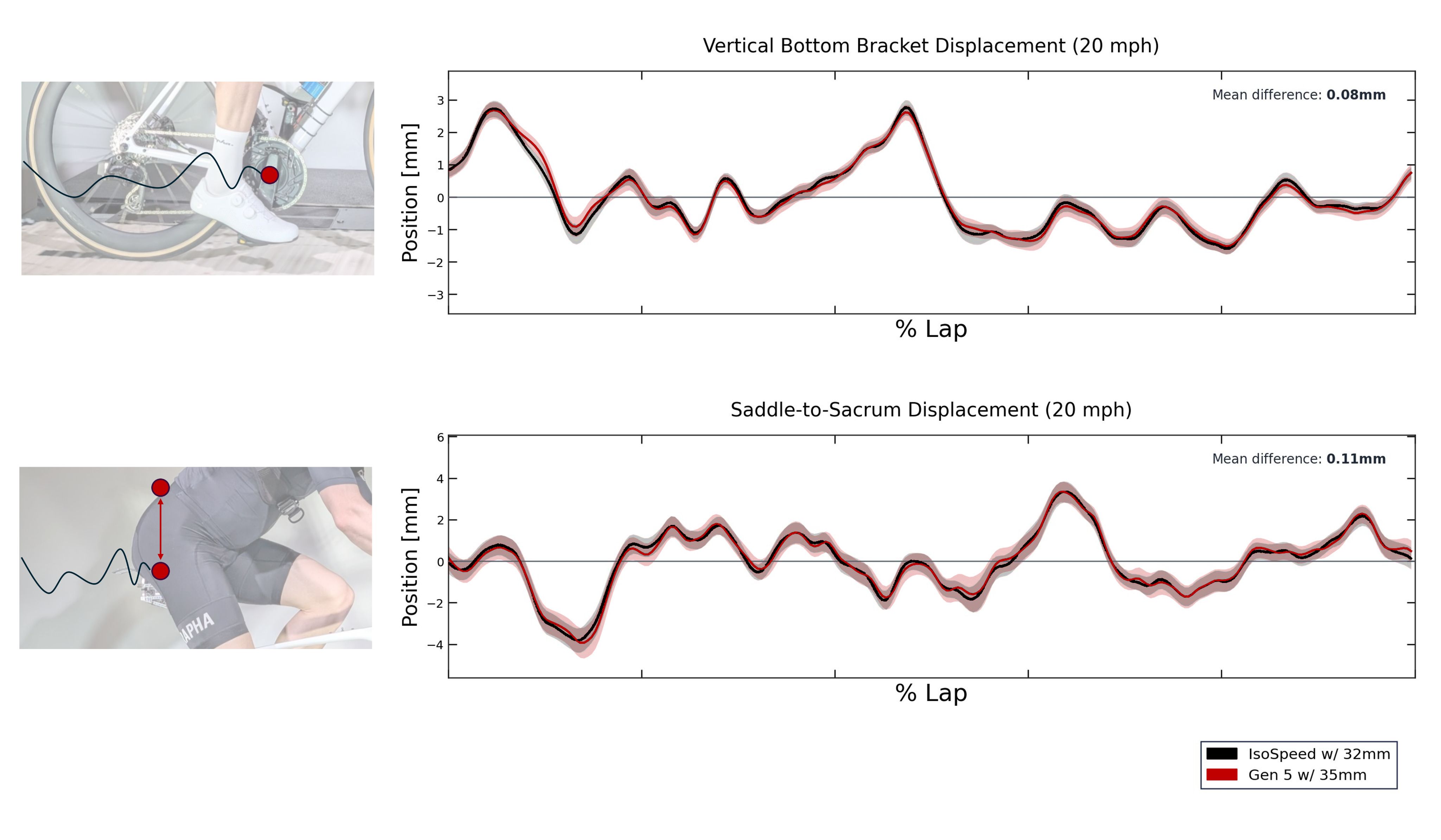
Figure 7: 3D Motion Capture Lap Ensemble Mean of Bottom Bracket and Saddle-to-Sacrum Displacement
Conclusion
Gen 5 Domane is a lighter and simpler carbon road bike that delivers on its promise to provide a smooth, efficient ride due to the geometry and carbon fiber layup of the seat post and frame, as well as the 35mm tire spec*. Gen 5 Domane also retains the same beloved endurance road geometry and fit, giving riders the comfort, confidence, and efficiency that have defined Domane from the beginning.
*35mm tire clearance comes spec on all models except SLR 9 AXS 1x
Citations:
1. Drouet J-M, Covill D, Leroux M, Richard S (2022) On metrics to assess road bicycle dynamic
comfort during impacts. Sports Eng 25:1. https://doi.org/10.1007/s12283-021-00366-x
2. Tour Magazine Pedaling Stiffness Test: https://www.tour-magazin.de/en/buying-advice/components/how-tour-tests/how-tour-tests-the-tour-road-bike-test-in-detail/
3. Trek CheckOUT Whitepaper: https://www.trekbikes.com/us/en_US/checkout-full-suspension-science/